Erasmus+ Project: “Non-formal Education for Disadvantaged People – Qualification of Professionals in a European Context”
Project No.: 2024-1-DE02-KA210-VET-000244075
Fourth Transnational Partner Meeting, 23–25 September 2026, Cologne (Germany)
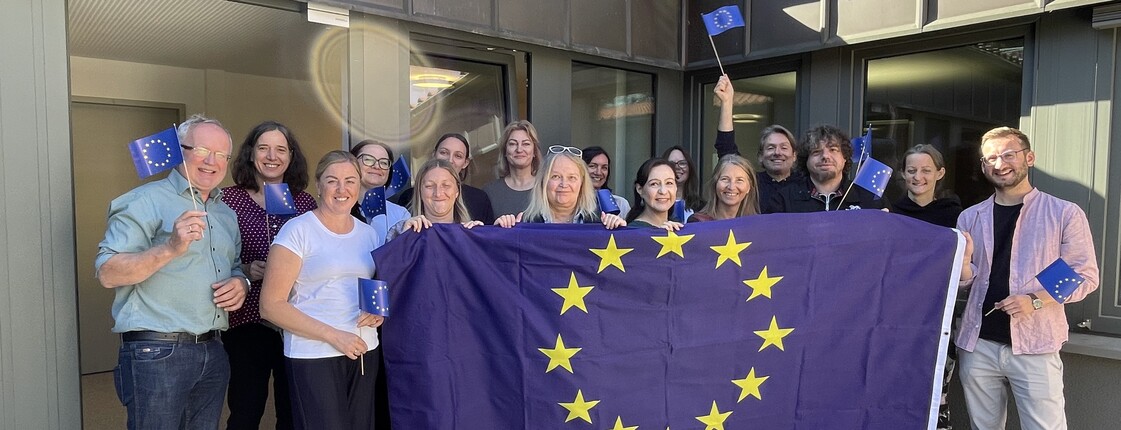
From 23 to 25 September 2026, the final workshop of the Erasmus+ project “Non-formal education for people with special needs – Qualification of professionals in a European context” took place in Cologne. A total of 17 professionals from five European partner organisations participated in the three-day meeting. They work in counselling, support and education for disadvantaged people.
The meeting in Cologne marked the conclusion of two years of transnational cooperation. Once again, the focus was on professional exchange concerning different approaches to non-formal learning, the practical testing of methods, and the question of how the experience gained during the project could be applied in the participants’ own professional practice. The workshop combined expert presentations and examples of good practice with practical exercises, joint reflection and the direct involvement of disadvantaged young people.
First day: Professional exchange and examples of good practice
The first working day, 23 September, took place at the Diocesan Caritas Association in Cologne. Following a welcome and a round of introductions, all participating partner organisations reported on recent developments since the previous project meeting.
The first thematic focus was on how sport can be used as a method of non-formal learning in work with children, young people and young adults. Robin Schröder presented the work of RheinFlanke gGmbH. The organisation combines sport with youth work, social work and education. Sport is used not merely as a leisure activity, but specifically as a means of reaching young people and as a learning environment for developing personal and social skills.
Different levels of sport-related educational work were presented. Sport can initially be used to build relationships, promote health and bring young people into contact with one another. Building on this, sporting activities can be used implicitly or explicitly to support personal and social development. The approaches used include social and experiential learning, as well as other sport-based methods. It became particularly clear that low-threshold activities such as football provide opportunities to reach young people who are difficult to engage through conventional educational provision.
In the afternoon, Sarah Jasmine Ernst from Lernende Region – Netzwerk Köln e.V. presented the “Financial Health for Parents” programme. The approach provides an illustrative example of how an everyday yet sensitive topic can become the subject of non-formal education. Its aim is to help parents strengthen their financial literacy, make informed decisions and, at the same time, recognise their role as models for their children.
The focus was not simply on imparting financial knowledge. Instead, the concept relies on active learning methods, the exchange of experiences and practical exercises rooted in everyday life. Participants learn on the basis of their own experiences and work through specific situations from family life. The methods presented included, for example, positioning exercises to distinguish between needs and wants, as well as creative methods that provide an accessible introduction to money, a topic that is often associated with feelings of shame.
From different perspectives, both presentations therefore illustrated a central principle of the Erasmus+ project as a whole: non-formal learning is rooted in people’s everyday realities, activates existing experience and skills, and creates opportunities to connect learning directly with daily life.
Second day: Experiencing non-formal learning in practice
24 September was devoted entirely to practical learning. The host organisation was IN VIA Köln e.V. Following the welcome, a full-day workshop entitled “Creativity and Arts in Social Work” began, facilitated by Mareike Stauder and colleagues.
In the morning, the professionals explored creative forms of non-formal learning in a photography workshop. The emphasis was not on theoretical knowledge of photography, but on learning through doing: observing, changing perspectives, discovering subjects and expressing one’s own perception creatively. This enabled participants to experience for themselves how creative methods can engage people and initiate learning processes without relying on conventional classroom-based forms of teaching.
The afternoon focused on memorials and monuments. A distinctive feature of this part of the workshop was the direct involvement of disadvantaged young people, many of whom had refugee backgrounds. The European professionals and the young people worked together in groups and created their own small monuments on a range of themes.
This made a key principle of non-formal education directly tangible: learning emerges through joint activity, creativity, exchange and participation. The young people were not merely the target group of an educational method, but active partners in a shared process. Differences in language or social background became less significant in the context of the shared creative activity.
This combination of professional development for practitioners and direct work with young people made the second workshop day a particularly practice-oriented element of the final meeting. The professionals were able not only to learn about methods, but also to try them out directly and reflect on how they could be transferred to their respective fields of work.
Third day: Reflection and looking to the future
The final project day, 25 September, was devoted to jointly evaluating the workshop and reflecting on the project as a whole. In groups, participants considered three guiding questions:
- What were the project’s most important results and highlights?
- What have I personally learnt from the project, and what have I learnt for my professional work?
- What added value did the transnational cooperation provide? This deliberately broadened the focus beyond the individual meeting in Cologne to encompass the entire European cooperation. The professionals were able to bring together their experiences from the various phases of the project and reflect on which methods, approaches and ideas they would like to use in their own future work.
This was followed by a joint review of the project and information about the final project report. The meeting concluded with an exchange of views on opportunities for future cooperation between the partner organisations.
Conclusion
The final workshop in Cologne brought together the central elements of the Erasmus+ project in a particularly effective way. It connected theory and practice, professional exchange and direct work with disadvantaged young people, as well as national experience and European perspectives.
The examples from RheinFlanke, the “Financial Health for Parents” programme and the practical workshops at IN VIA Köln e.V. demonstrated the wide range of ways in which non-formal learning can be designed. Sport, financial education, photography and creative artistic work may at first appear to be very different fields of activity. What they have in common, however, is that they build on people’s everyday realities, enable active participation and promote learning through personal action and experience.
The Cologne meeting also highlighted the added value that European cooperation offers professionals. Different professional and cultural perspectives made it possible to view one’s own work afresh, learn about methods used by other or and discuss shared challenges in working with disadvantaged people.
Following the previous transnational meetings and the joint online training, the workshop in Cologne therefore represented not only the formal conclusion of the Erasmus+ project, butlso an intensive shared learning phase. The contacts established during the project, the exchange of methods and the shared experiences provide a basis for continuing European professional exchange beyond the lifetime of the project.